Sunday, 22 November 2015

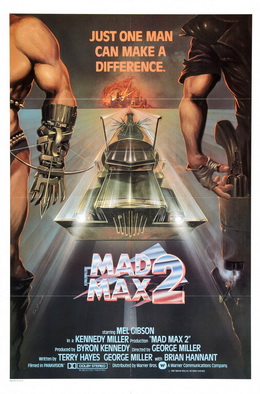
MAD MAX:
Fury Road
(2015)


Caucasians destroying what they do not know how to share

Summary: Whites driving around a desert; while using-up the Earth’s last remaining fossil fuels.

Silly and repetitive movie that is essentially a pointless retread of the style of Mad Max 2 (not Mad Max since there was no apocalypse in that first movie), but with a bigger budget, less substance and greater illogic. The petroleum-starved future-worldsters possess an endless supply (despite their being no petrol stations) of the very dramatically-catalyzing liquid said to be in short supply - not to mention an endless supply of military firepower.

The improbable special effects place the two-dimensional characters in impossible situations from which they could not possibly escape; leaving us with a big dipper of a movie - possessing little relationship to lived experience.

The characters only exist to survive the regular onslaught of frenetic violence that attempts to paper over the emotional thinness of the screenplay; explaining the dearth of affective differentiation between the characters. That no substantive culture is actually being preserved here is what one has come to expect from a Caucasian culture where mere survival is more important than living fully. There is no explanation (nor is this fundamental issue dramatically explored in any detail) why Whites do not invent a culture that they can call their own, instead of appropriating from others - that they would be prepared to die to defend? Or are they really as culturally unimaginative as they are in the esthetic realm?

This in-substantialness spurs the peculiar todestrieb so common among Whites in movies like this - Valhalla being somehow more honorable than productive endeavor - while also supporting the ludicrous premise (a water supply monopoly without the military might to enforce it).

The only really believable aspect to this movie is that of Whites repeating the same behavior patterns that produce the problems they experience here - ad infinitum. Whites simultaneously see themselves as technological superheroes; while ultimately realizing that their technology has caused more problems than it has solved - with no apparent means of escaping the corner into which they have, thus, painted themselves (save by repeating their conditioned reflex to destroy).

Following a global disaster, Whites would - most likely - become more overtly violent than at present; revealing what they are really like deep inside (underneath the layers of White supremacist emotional repression and self-denial). But that is a theme for another, far better movie.

To keep the White male audience interested, skinny White girls are presented as half-dressed eye-candy, yet no-one who wishes to avoid painful sunburn and/or skin cancer ever dresses this way in the kind of desert environment in which the story is set. Yet, suntans are as little in evidence here as is the medical degree of the writer/director.

That the sub-Terry Gilliam black humor serves no real dramatic purpose only emphasizes the abundantly-obvious fact that this is a cynical exercise in audience time-wasting, with the ghoulishness usually attendant upon having nothing to live for and nothing much to say about the resulting emotional emptiness: Both for the characters and for the creators of this dreck. The large sums of money expended on dross like this is a shameful waste of physical resources and otherwise fine actors.

Sunday, 15 November 2015

Choir


The Death of Western Music

Summary: Yet another poor White kid helped by wealthy Whites to achieve not much in particular - but at least he is White.

It is taken as read that the Western classical music presented here is of some value to those listening to it and to the wider White culture which produced it, but this assumption - like so many assumptions in White culture - is not dramatically-examined in case it turns out to be untrue.

Rather than suggest that music has some inherent meaning or value in itself - or some cultural meaning around which a worthwhile society can coalesce - we are presented with the pretense that music somehow unites people - even those for whom it has no meaning or cultural or social value - without either explaining such a process and without addressing such issues as the stasis of high culture versus the vibrant dynamism of low, especially Black, culture; mockingly referred-to here.

The music here is simply on show - to be seen but not really heard - since even its Christian roots are elided in favor of sentimentality. Whites are so loyal to their own culture that they will render it purely materialistic in order to preserve what has long past its sell-by date; destroying any value it once possessed for good, in the process. The only existential choice presented in the drama is the choice not to squander one’s talent - regardless of the totalitarianism such a Hobson’s Choice affectively represents; rendering the Personal as Political as only the fallacy of Political Correctness can. No wonder Whites do not believe in free will.

The lack of human warmth and empathy inherent in White culture is emphasized, but never dramatically linked to the contemporary cultural meaninglessness of centuries-old music that has nothing to say about life in the West today. We are expected to believe that music has a therapeutic purpose in helping overcome human travails - as if paranoid-schizophrenics could be cured by music therapy. This is mystical, pseudo-religious claptrap that is the reverse of the coin of absurd claims that violent video games can make one violent. There is no empathy for any character, here, only an emotionally-repressive desire to discipline talent so it fits the patterns of the past - no matter their relevance today - as a vain substitute for family structures (eg, extended) that Whites are busy abandoning. This is why the boys here develop no lasting friendships and the grieving over the loss of the central character’s mother is all-too-brief.

There is also no dramatic exploration of the nature of talent - as if it comes from nowhere and can be appreciated by only a select few who, yet, cannot explain its existence. In this way, the characterization is poor because the characters are nothing more than stereotypical mouthpieces for the screenwriter&rsquos superficial inability to say anything of importance about music, culture, ontogeny or self-expression. Here, character is malleable and does no more than meet the needs of the screenplay, as opposed to those of human nature; leaving the audience with undifferentiated characters as part of an amorphous, multi-headed Hydra which, one moment, is hostile, the next, beneficent. This leaves the performers with nothing more to explore than the silliness that results from claiming that those with exceptional talent should be encouraged; while those apparently lacking should be left to rot. Even the always-great Kathy BATES and ever-delightful Debra WINGER have nothing more to do than be comic foil and look beatific, respectively, because the script offers them little else.

The thematic formalism and emotional shallowness of the musical appreciation shown here is never explained, nor are the motivations for doing nothing more than reproducing the modes of the past, rather than moving the form on with anything like innovation. It is laziness and alienation that leads to White culture becoming fossilized; the traditions on show here coming to exist for their own sake; serving no higher purpose other than themselves - an inward staring at a crepuscular Caucasian abyss. Pretending to be about nurturing talent when it is really about White narcissism and living in a past that is no longer relevant, this movie only hints at the validity of such a claim, while wallowing in its own sickly-sweet solipsism.

One can only assume that White culture has nothing left to offer other than nostalgia and a trumped-up sense of its own importance, as here. The music is very nice, but there is nothing to uplift the soul, stir the emotions or engage the mind, since a balance of these things is not present. After all, what is the point of producing music if it is just a technical exercise in self-discipline?

Sunday, 8 November 2015

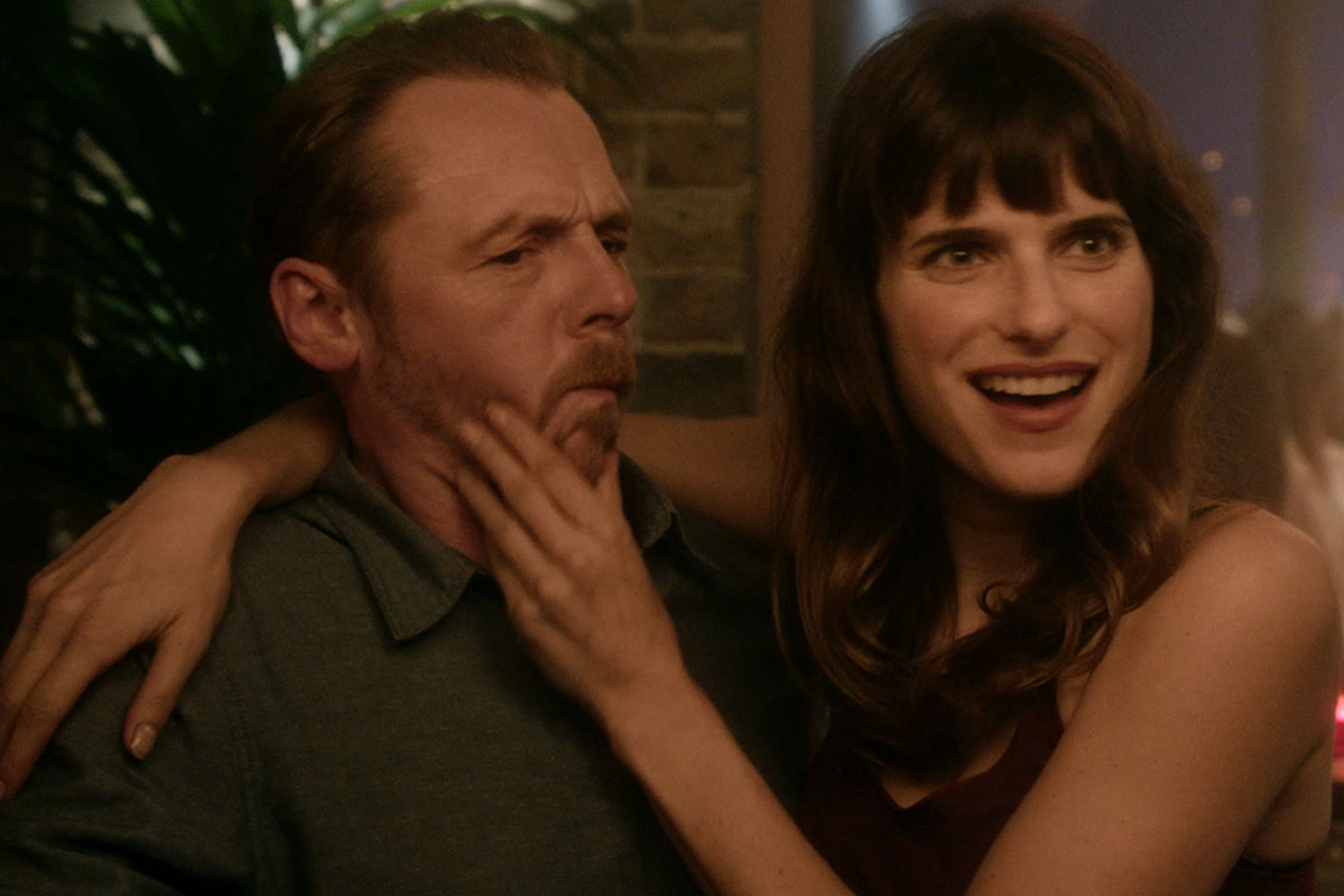
Man Up


Summary: Caucasians making poor eye-contact.

Although hopelessly contrived and superficial, this is an excellent example of why Whites have the highest divorce rates: They conflate the Personal with the Political.

Here, the characters relate to each other only as members of each other’s gender - not as individuals. This induces the fear of not being accepted by the entire gender group by which they judge each other, rather than simply being accepted as an individual by another individual. By taking Politics to bed, in this way, Whites ensure - right from the start - the failure of the Personal relationships they ostensibly seek.

Despite the lack of insight into the moral and political predicament established by the screenplay, Lake BELL & Simon PEGG complement each other well; being engaging enough to allow us to overlook the essential shallowness of the entire enterprise and the superficiality of their characters - as written.

Sunday, 1 November 2015

While We’re Young


Summary: Whites struggling with their moral & cultural identity.

Amusing, poker-faced comedy about White culture’s lack of substance; springing from discussing life rather than actually living it.

Computer-programmed life stages entail a White scrabble to keep-up with friends (the Joneses) - regardless of ability. This play-acting becomes their only substantive life goal.

The fragmentary understanding of the world presented here reflects a hermetically-sealed culture that is more of a psychic trap than a serious source of genuine identity. With no-one of substance to help one grow and mature, Whites flounder in an abyss that conflates the Personal with the Political; renewing their youth through their children in middle-age - when they run out of anything else to do.

The central couple’s lack of children leaves them with nothing to aspire to; their culture offering them little solace here other than the pretense of making friends with younger, more parasitic versions of themselves. There then emerges an enervating tension between feeling left behind one’s contemporaries versus the personal utility of dolce far niente.

That the persona is not the same as the character is not dramatically explored here to any degree; leaving the characters with a sexual relationship that is not based so much on shared values as it is on shared cultural references; encouraging the personal laziness that marks the breakdown of any significant relationship, along with the implication that if one spends time with others just like oneself, one will find one’s complement. But this only leads to finding one’s mirror, followed by the inevitable White whining when such relationships eventually fail.

The movie contains some great performances, particularly from Adam DRIVER & Naomi WATTS; acting the part of people acting parts in their own lives; their characters lacking the innate talent to do anything other than play the social games that make them appear talented. But they are the blind leading the blind; recording - through their documentarian careers - a world they fear to live in fully because they lack the experience to understand it.

The director is clearly the new Woody Allen - but with a more serious edge - who still has not, like his characters, understood the political context of his own work and life.

Contact Form:

Name

Email *

Message *

Science:


No science is immune to the infection of politics and the corruption of power.


Jacob Bronowski… (1908 - 74), British scientist, author. Encounter (London, July 1971).


Sleep of Reason:


The dream of reason produces monsters. Imagination deserted by reason creates impossible, useless thoughts. United with reason, imagination is the mother of all art and the source of all its beauty.


Francisco José de Goya y Lucientes… (1746-1828), Spanish painter. Caption to Caprichos, number 43, a series of eighty etchings completed in 1798, satirical and grotesque in form.


Humans & Aliens:


I am human and let nothing human be alien to me.


Terence… (circa 190-159 BC), Roman dramatist. Chremes, in The Self-Tormentor [Heauton Timorumenos], act 1, scene 1.


Führerprinzip:


One leader, one people, signifies one master and millions of slaves… There is no organ of conciliation or mediation interposed between the leader and the people, nothing in fact but the apparatus - in other words, the party - which is the emanation of the leader and the tool of his will to oppress. In this way the first and sole principle of this degraded form of mysticism is born, the Führerprinzip, which restores idolatry and a debased deity to the world of nihilism.